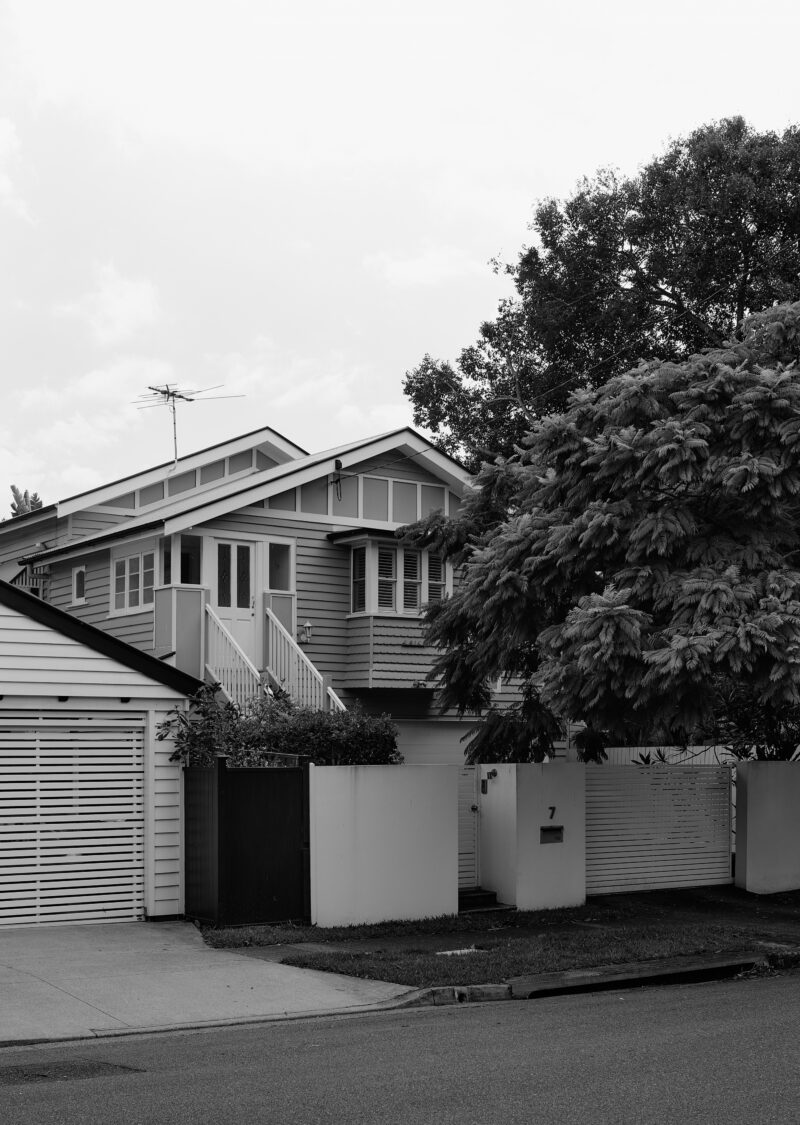
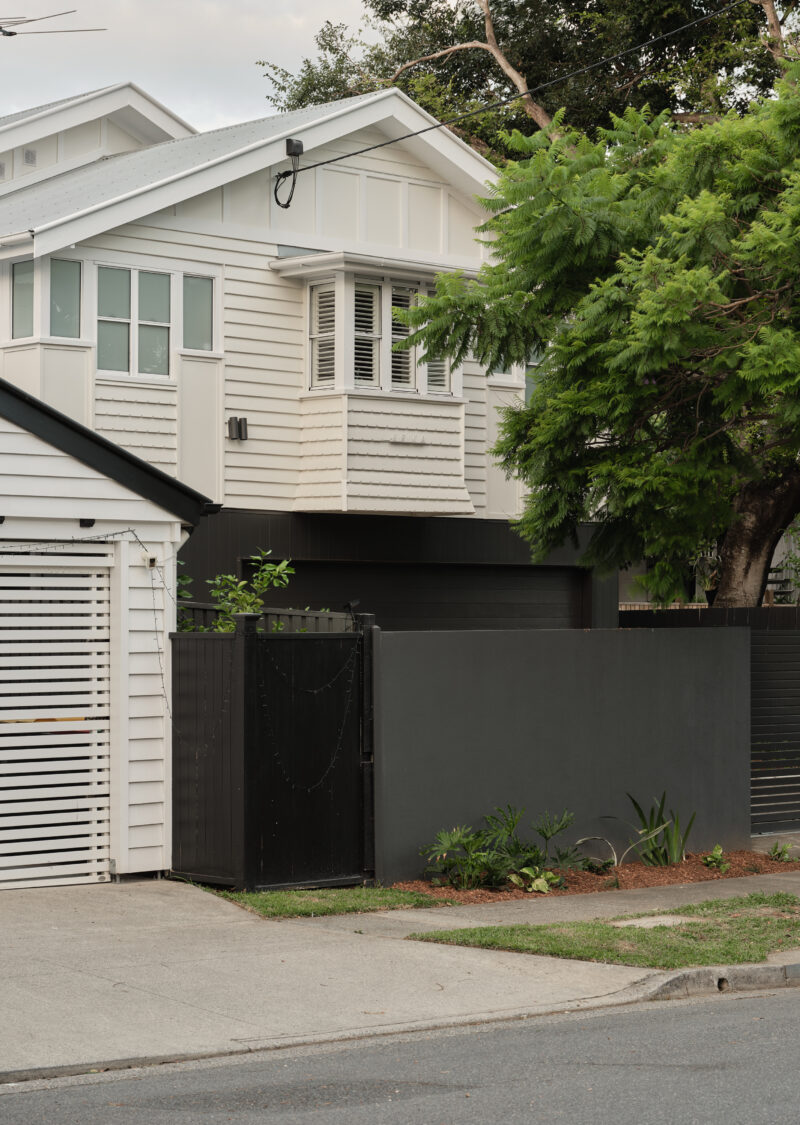
Cara and Callum purchased under the assumption that a simple undercroft build-in was possible. The site was later confirmed to be impacted by overland flow flooding, triggering specific Brisbane City Council flood codes that restrict habitable rooms at ground level. Rather than treating this as a limitation, the design reworked the home to add value while remaining fully flood compliant.
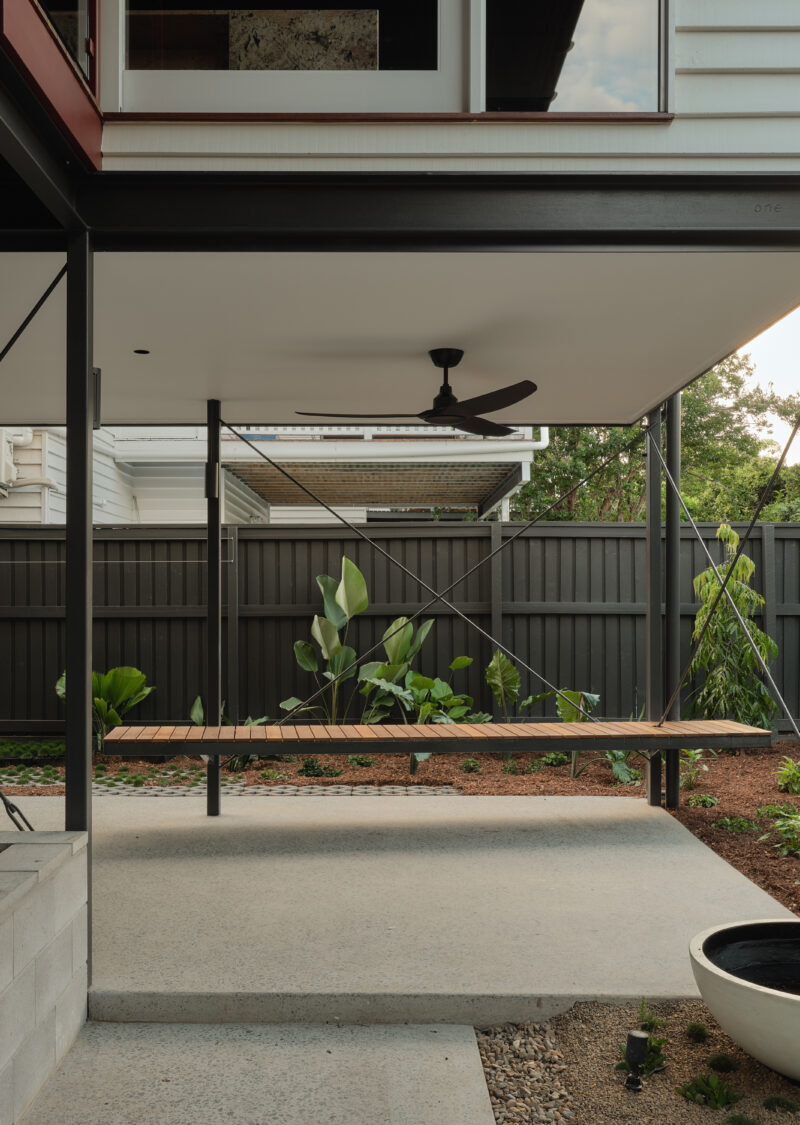
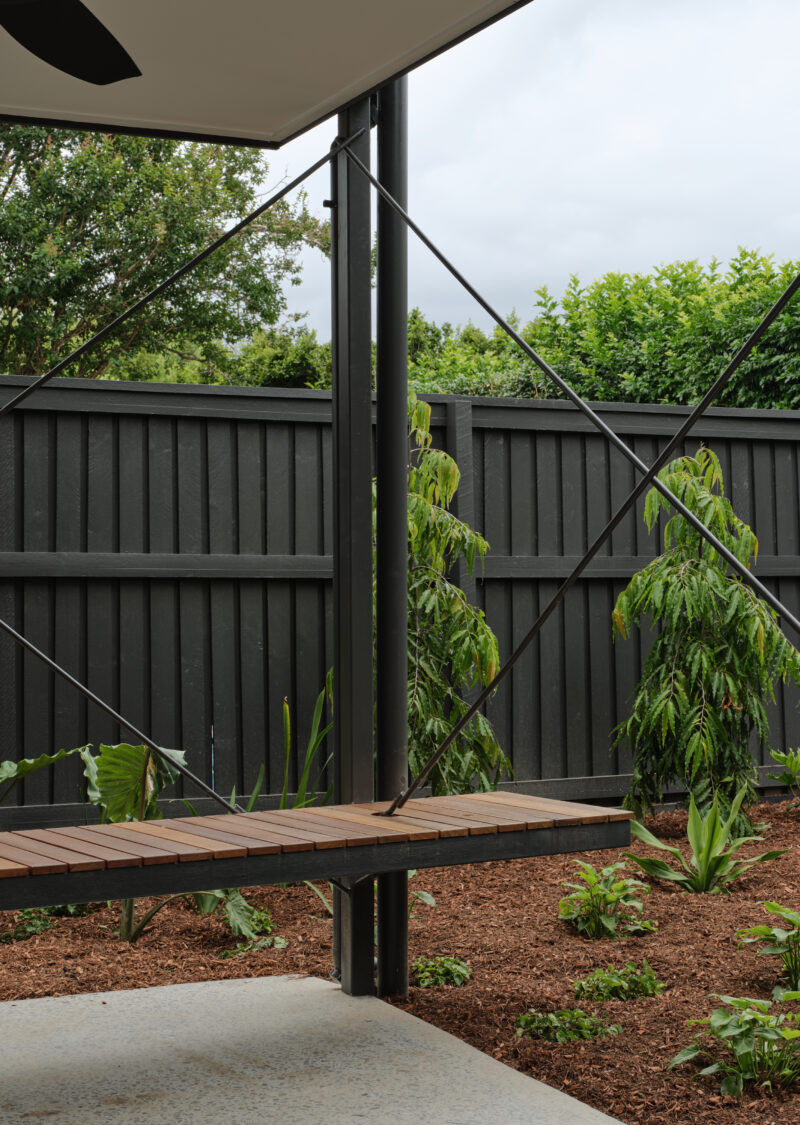
The existing Queenslander was carefully retained and reconfigured, with living areas maintained at the upper level to maximise light and privacy. A new lower level was designed as flood-resilient, non-habitable space, accommodating a gym, laundry, bathroom, external circulation and outdoor entertaining – all detailed to withstand potential overland flow events.
Critical to the approval process was close collaboration with flood engineers (Milanovic Neale Consulting), who modelled the proposal to ensure the development did not worsen downstream flooding conditions. By reducing building width and maintaining a clear flow path beneath the home, the design allows water to move naturally across the site during major rainfall events.
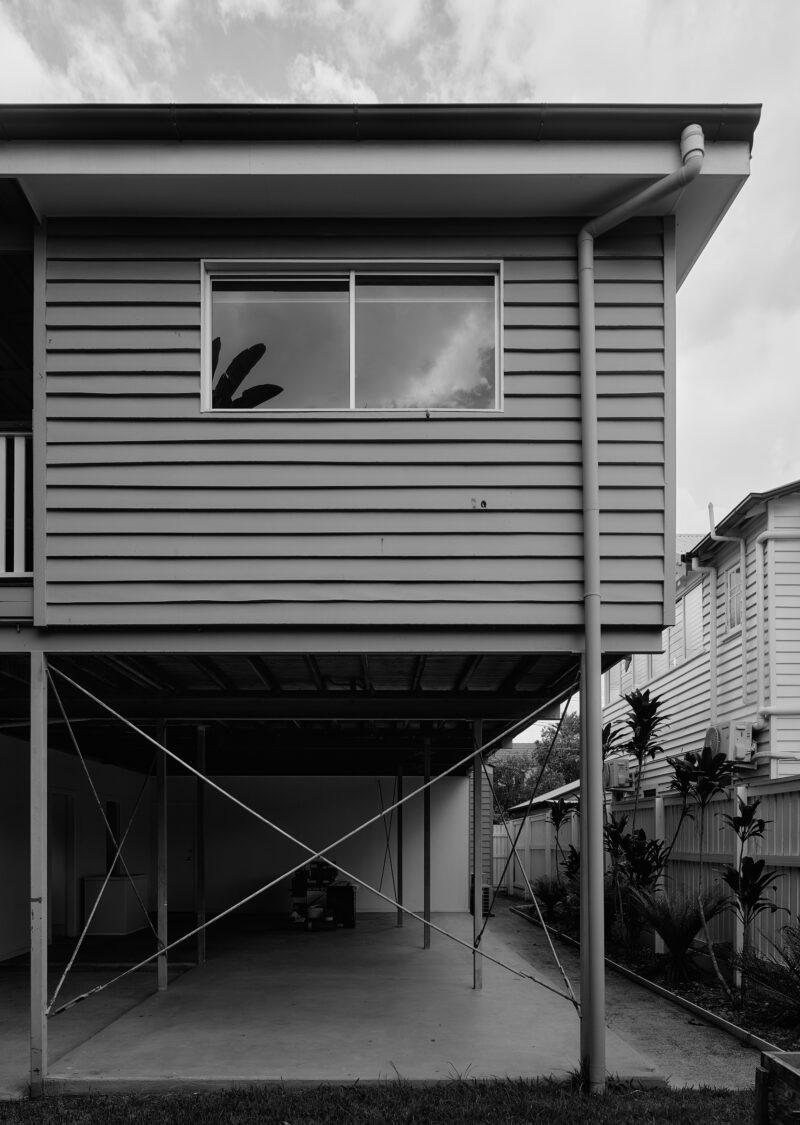
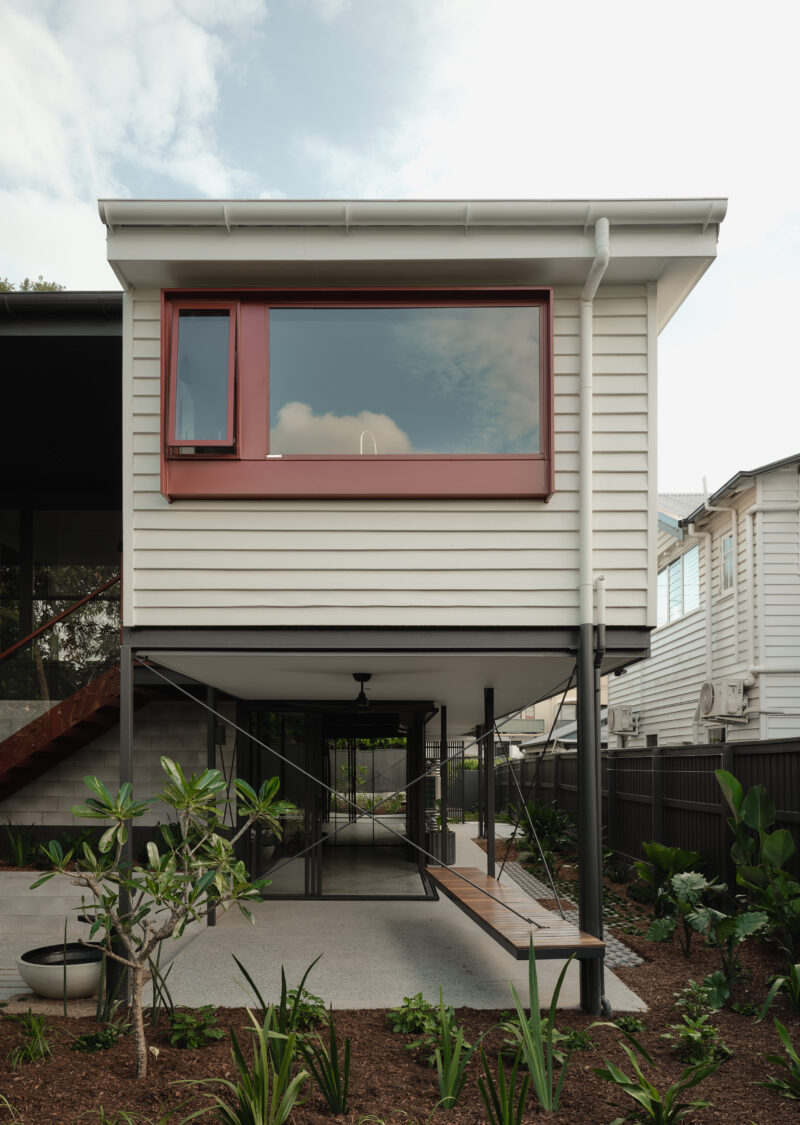
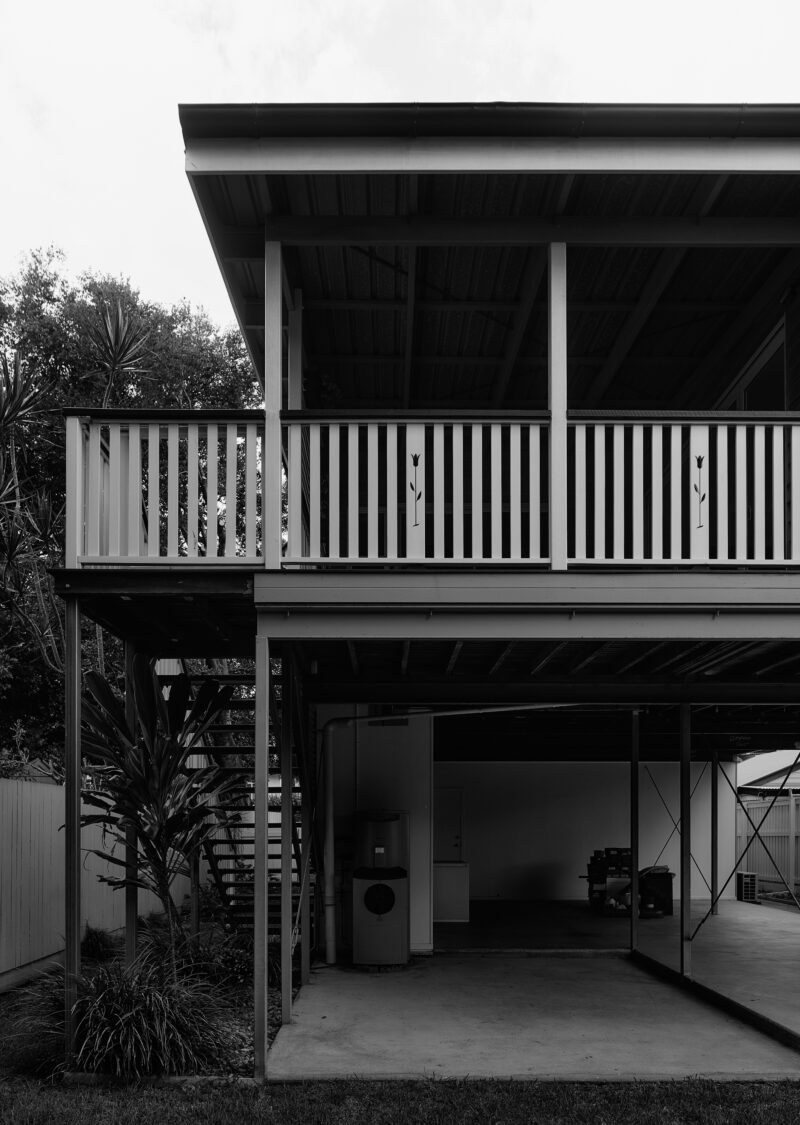
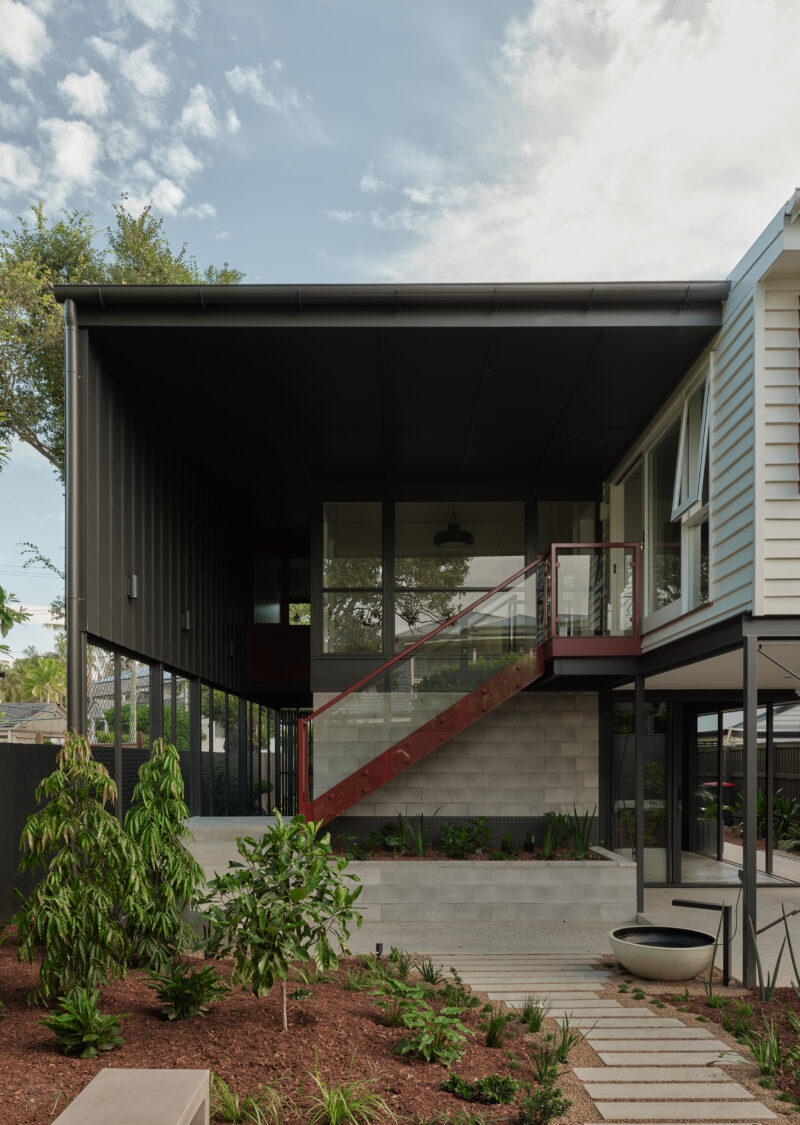
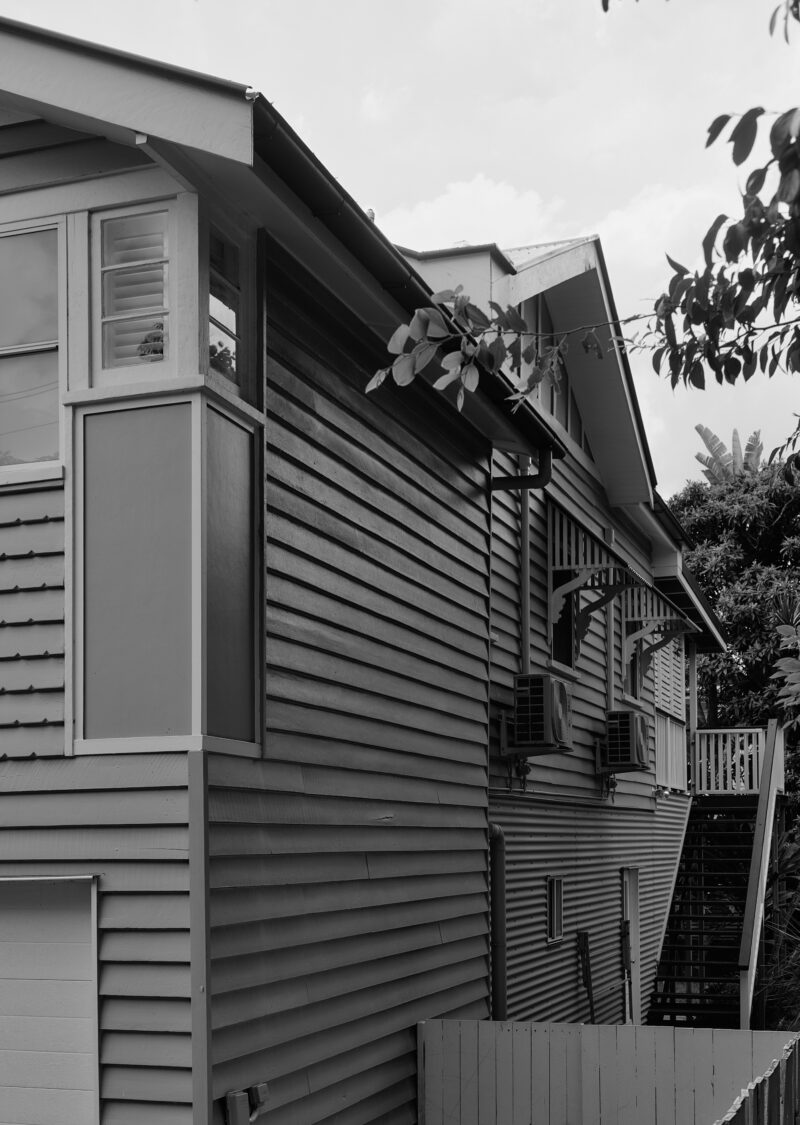
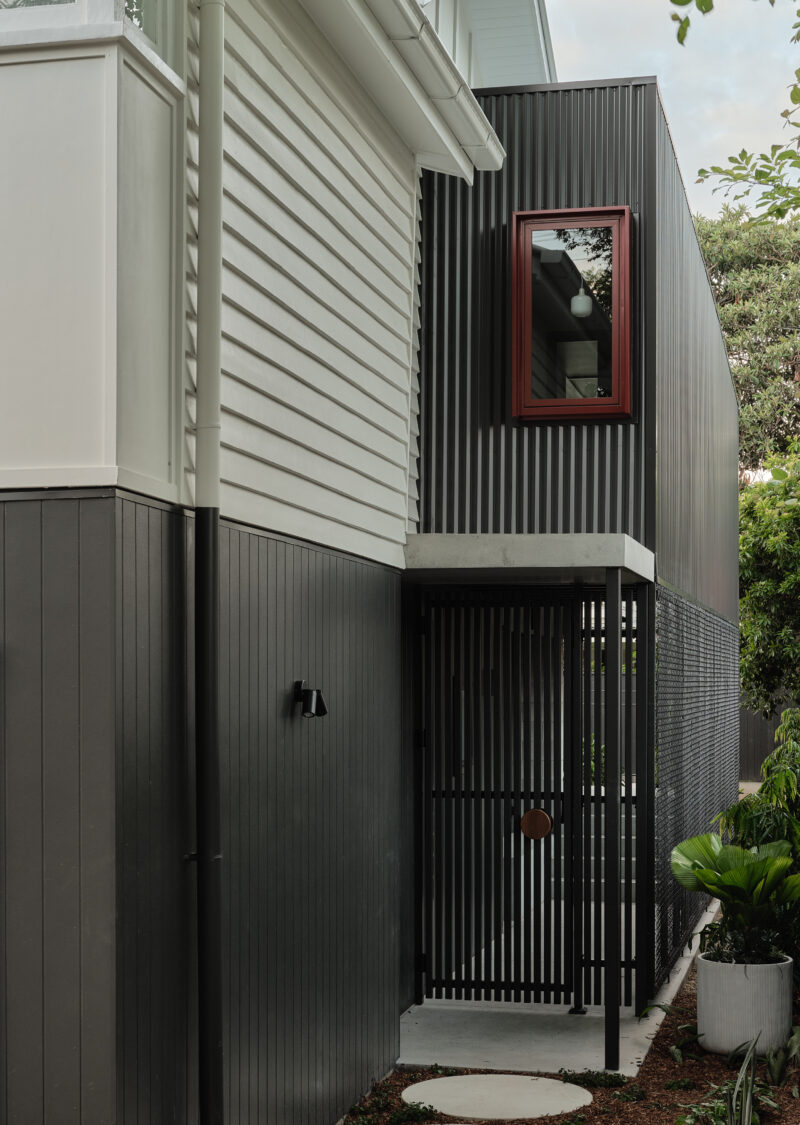
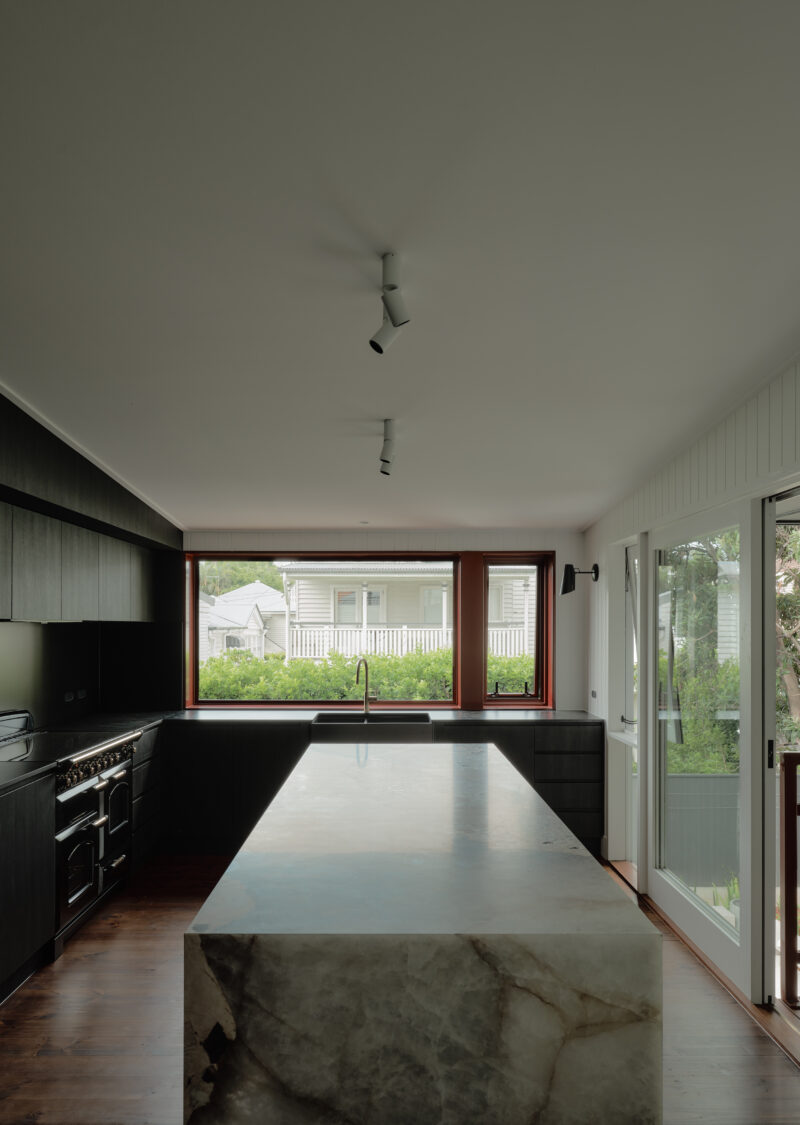
While the site’s overland flow overlay shaped the planning strategy, the architectural response was equally driven by a clear design ambition – to contrast the softness of the original Queenslander with a more industrial, contemporary layer.
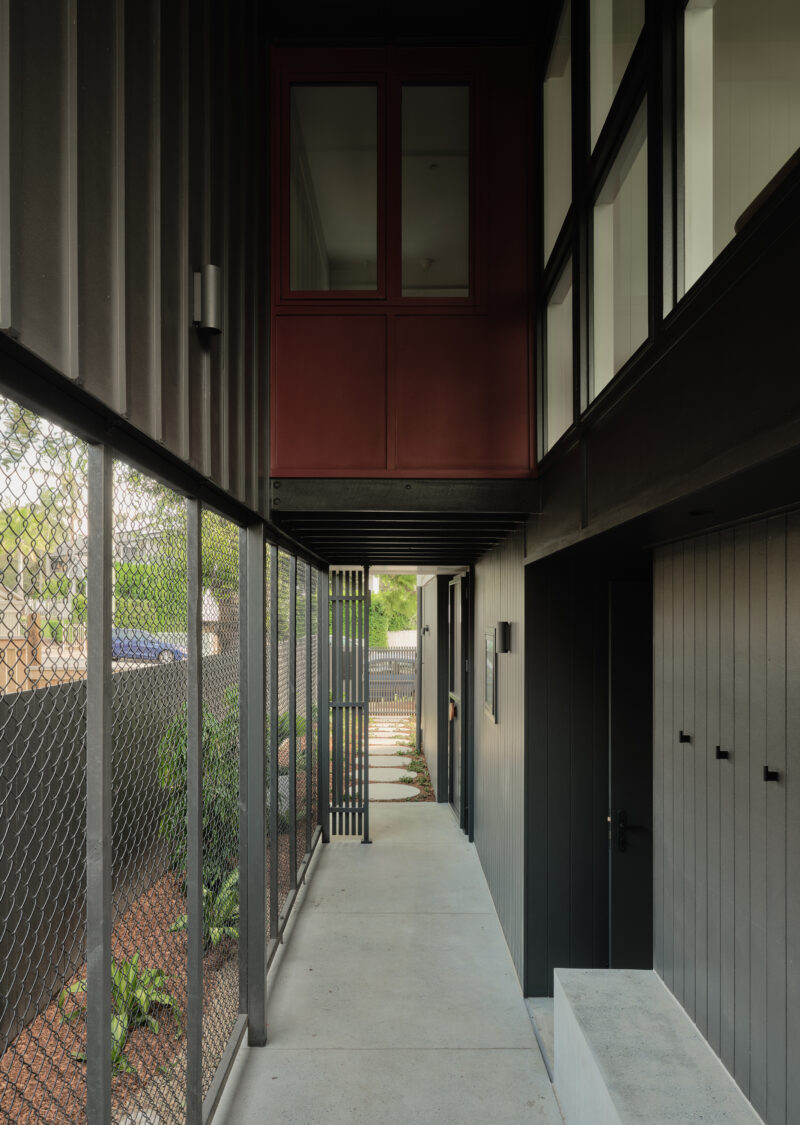
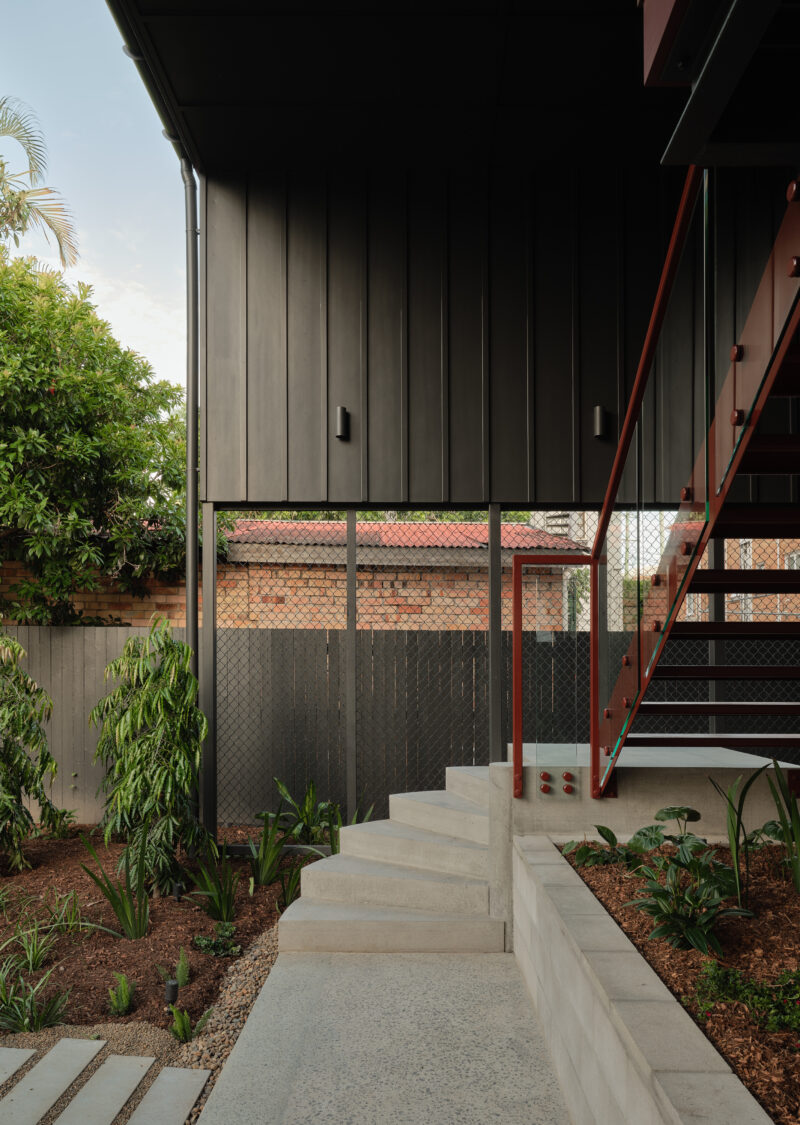
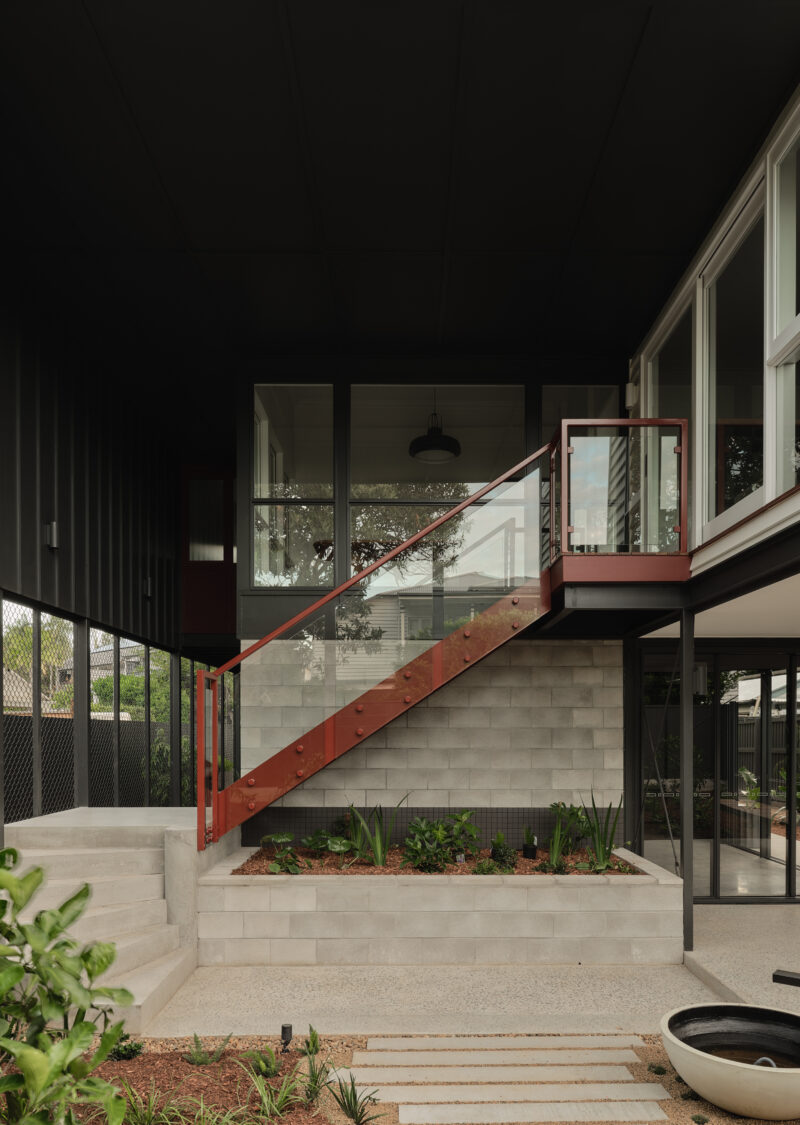
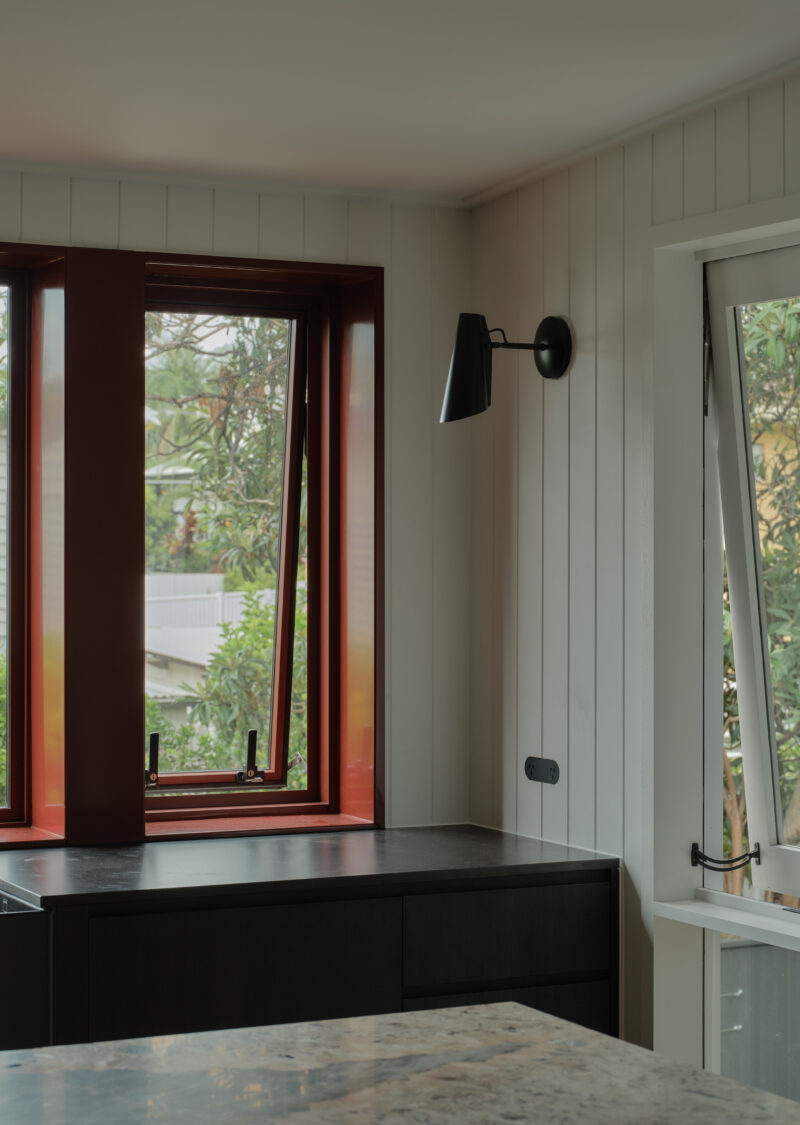
The clients described their brief simply: “Can you cross the aesthetics of a substation with a queenslander?.” This idea informed a series of deliberate interventions where new elements are clearly expressed rather than concealed. Red steel is threaded through the home in the form of window frames, balustrades and stair elements, while exposed floor structure and dark paint reinforces the distinction between old and new.
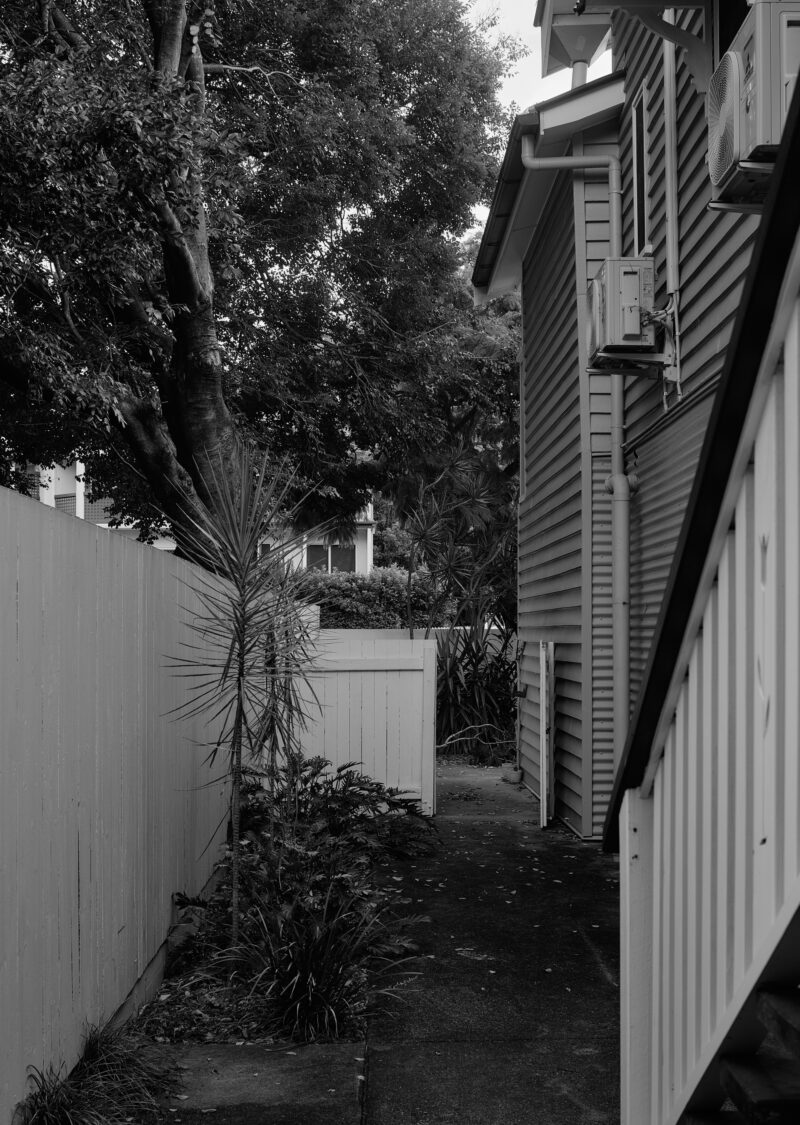
From the street, the original character of the home remains largely intact. Entry is via a new side passage designed to be overgrown over time, creating a moment of compression before opening into a double-height living space at the rear. Here, light, volume and garden connection define the experience of the home.
A red metal stair links upper-level living spaces to the new outdoor room below, allowing entertaining to flow naturally between levels. Rather than treating the lower level as residual space, it is carefully detailed as a robust, functional layer that supports daily life without compromising the architecture above.
Throughout the project, structure, material and junctions are intentionally legible. This clarity allows flood-responsive decisions to feel embedded in the architecture, not imposed upon it – demonstrating that flood-affected homes can be expressive, layered and architecturally ambitious.
Overland Flow & Flood-Affected Sites FAQ
What is overland flow?
Overland flow occurs when heavy rainfall exceeds the capacity of the stormwater system and water flows across the ground surface. Unlike river or creek flooding, overland flow is about the movement of water across land, not water rising and remaining in place.
Brisbane City Council’s planning controls focus on ensuring development does not obstruct these natural flow paths.
Is overland flow the same as being in a flood zone?
Not exactly. A property can be affected by overland flow without being in a river or creek flood zone. Overland flow is identified through Brisbane City Council Flood Overlay mapping and requires a site-specific assessment rather than a generic response.
Is overland flow a deal breaker?
No. Overland flow overlays apply to a large number of residential properties across Brisbane. With the right architectural and engineering approach, high-quality, flood-resilient homes are achievable while remaining fully compliant with council requirements.
Can I build under or extend my house on an overland flow site?
Yes – but with constraints. Habitable rooms such as bedrooms and living areas are typically restricted at lower levels on overland flow sites. However, non-habitable spaces (gyms, laundries, bathrooms, storage and circulation) are often permissible when designed appropriately.
Will council tell me the minimum habitable floor level?
No. Brisbane City Council does not provide a nominated minimum habitable floor level for overland flow sites. This level must be determined through a Flood Study prepared by a qualified flood engineer, in line with council’s planning scheme.
Do I need a flood engineer?
Yes. A flood engineer is essential for any development affected by overland flow. Their role is to:
- Model how water moves across your site
- Test proposed design options
- Demonstrate the proposal does not worsen flooding conditions for downstream properties
This information forms part of the Development Application (DA) process.
How much does a flood study cost?
A flood study will generally cost under $6,000. While it is an upfront investment, it often results in better design outcomes, smoother approvals and improved long-term liveability and value.
What is a “open undercroft” and why does it matter?
Brisbane City Council may require an open undercroft to allow overland flow to pass beneath a building. Depending on predicted water velocity and depth, this clearance is typically 1.5m or 2.5m. This requirement shapes how ground-level spaces are designed, not whether they can exist.
Do I have to leave the undercroft completely open?
Not always. A solid undercroft or concrete slab may be acceptable where flood modelling demonstrates the design does not obstruct overland flow or worsen downstream impacts. A skirting or valance is generally accepted by council if 50% of it is open (screens where every second paling is removed) . A reduced undercroft height may be possible in some instances if flood modelling works show that an extreme flood event does not inundate finished floor. This is assessed on a site-specific basis.
Can flood modelling improve the design outcome?
Yes. Flood modelling often reveals how water naturally moves across a site. This can allow for stepped floor levels, selective ground-level engagement and more refined design solutions -rather than lifting the entire home unnecessarily.
Why do some overland flow homes have poor design outcomes?
Poor outcomes are often the result of relying on generic or prescriptive flood solutions. Investing in bespoke architectural design integrated with flood engineering consistently produces more liveable, considered and site-responsive homes.