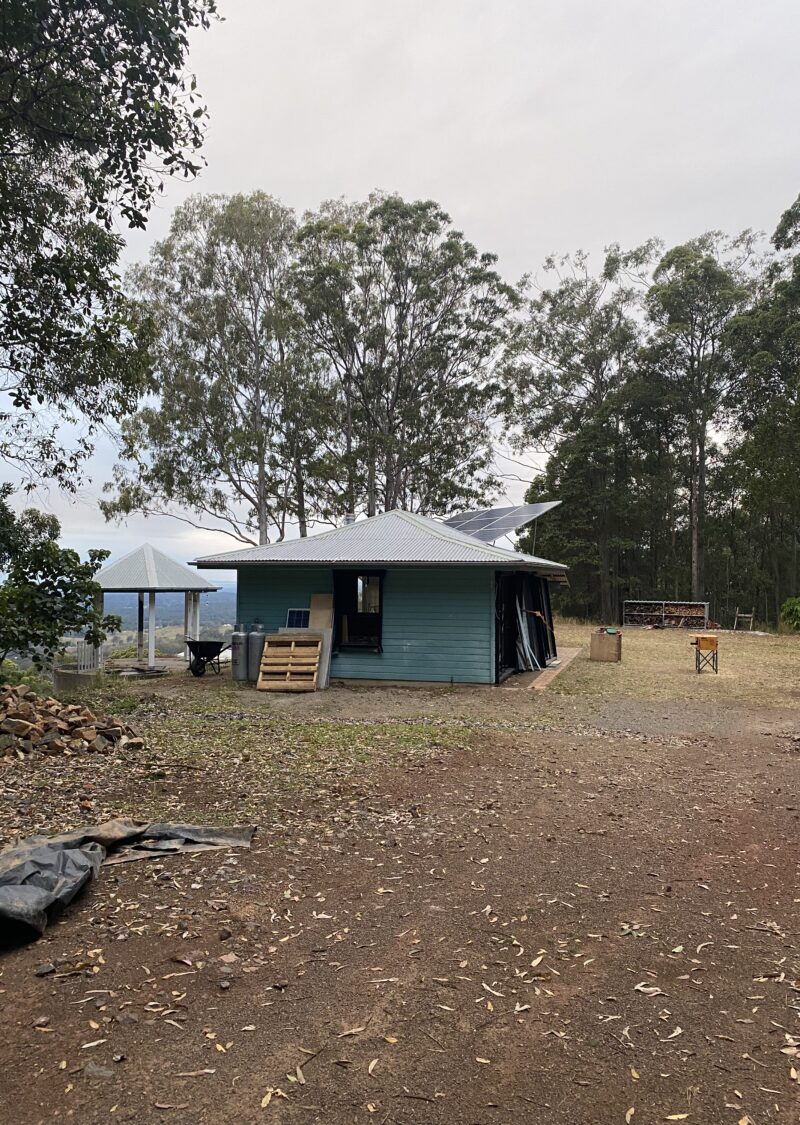
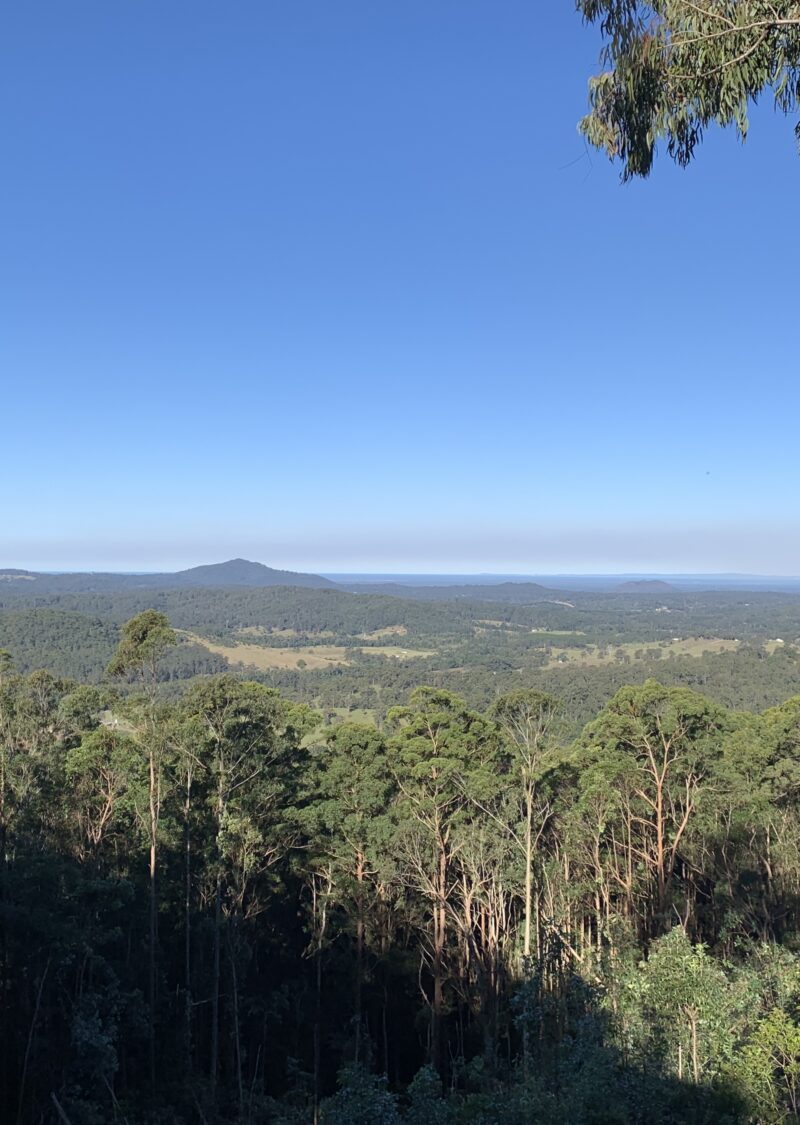
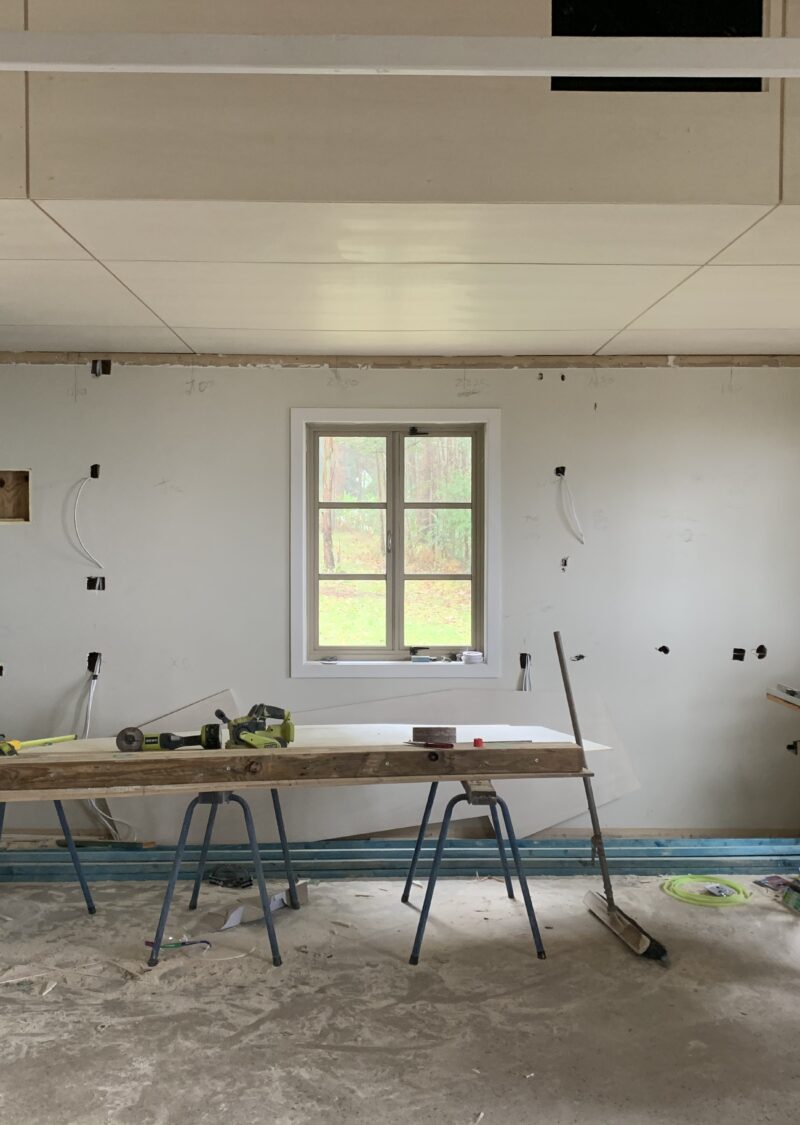
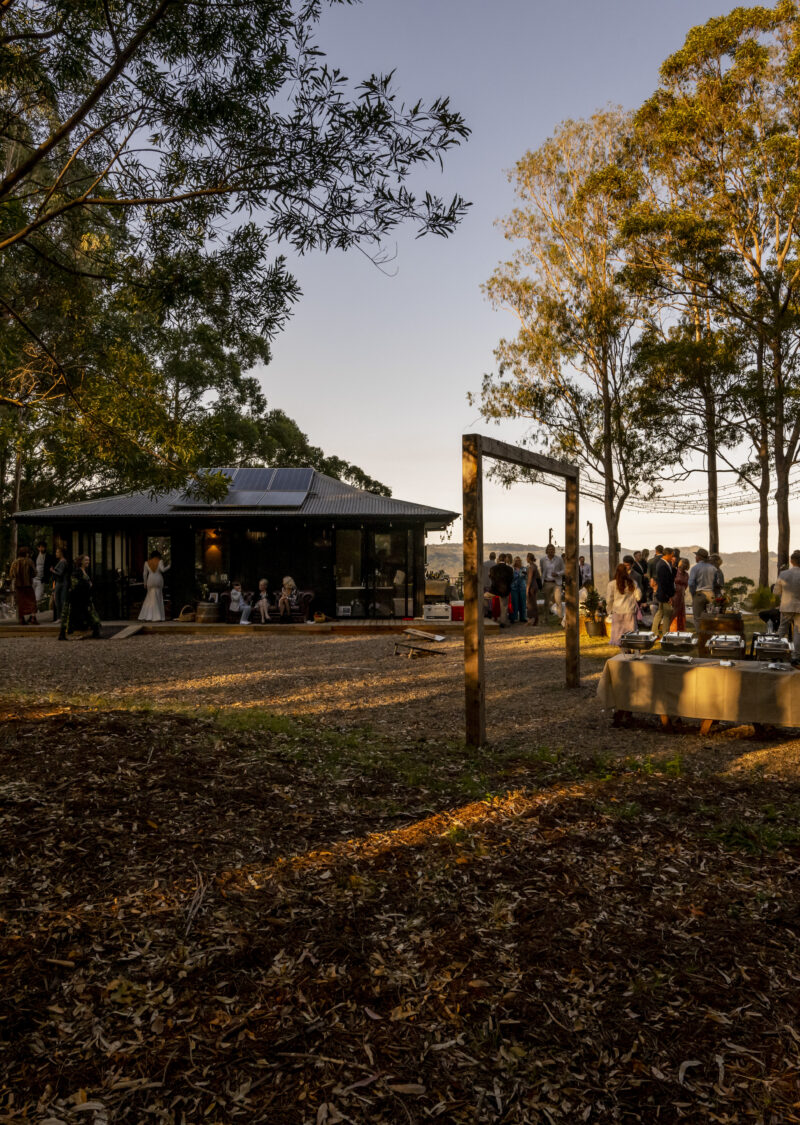
The property came with a tired 48m² cabin and an incredible view. The cabin was dated (read: ugly), poorly positioned and desperately in need of some love. Our plan was to turn it into a weekender for our family and somewhere we could rent out occasionally to help pay for the loan and the fairly significant rehabilitation the land needs.
What followed has been a very DIY renovation. Family and friends have been roped in, my brother has become our main labourer/project manager/miracle worker, and I’ve learnt quite a lot along the way.
Not really about building. More about being the client.
About being impatient. About wanting an amazing outcome and then discovering a new obstacle every time you think you’re getting somewhere. About budgets, compromises, mud, mice and the difference between what looks good in a photograph and what actually makes a place special.
As an architect, I’ve spent years guiding clients through exactly these things. Being on the other side of the process has reinforced a few things I already knew, and taught me some lessons I probably needed to learn.
1. You will probably spend more than you planned
You’d think that, given I’m trained in design, managing projects and budgets, I’d be exceptionally disciplined with my own. Nope. I’ve been TERRIBLE.
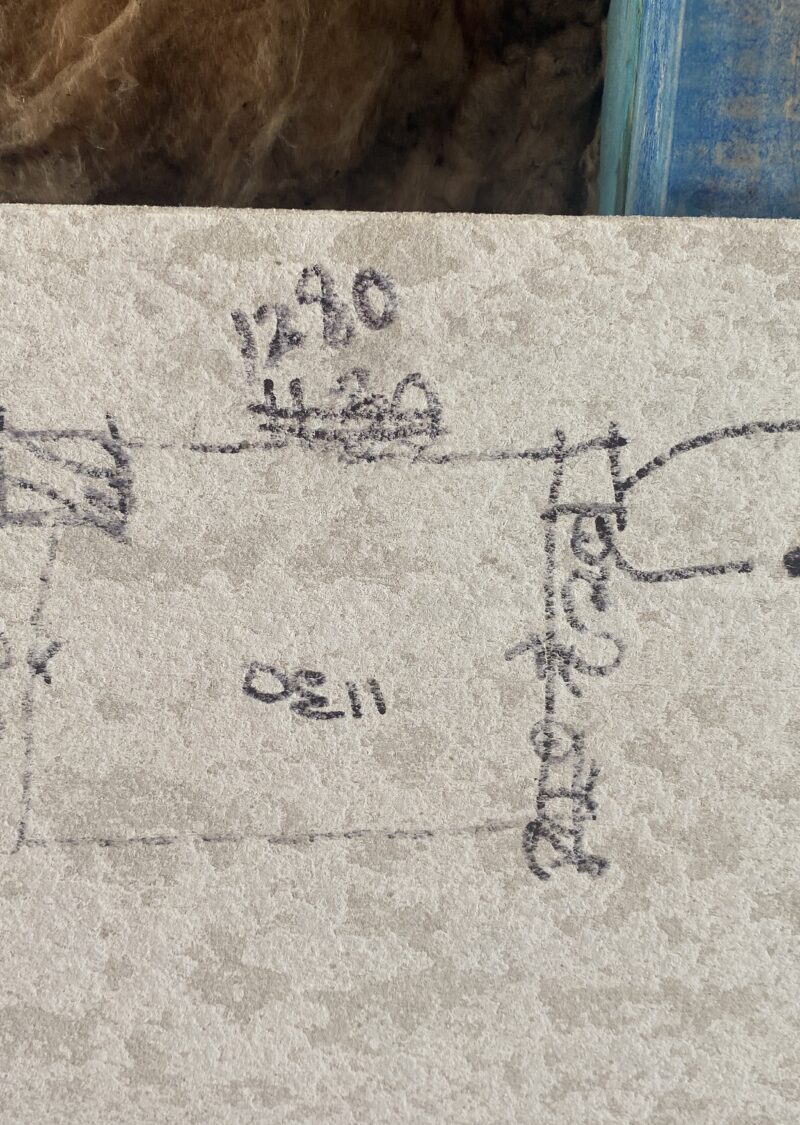
We started the renovation with one drawing, a few sketches on the walls and no particularly hard budget. The cabin isn’t just a building to us, it’s a dream. So when I found that gorgeous red concrete basin that cost three times what I should reasonably spend… of course I bought it.
It’s taught me a lot about the difference between cost and investment.
When you’re creating your dream, some things are worth spending money on. You should be emotionally invested in your build. The important thing is understanding what really matters to you, spending deliberately on those things and accepting that there will be trade-offs elsewhere.
Sometimes the right decision isn’t the cheapest one. And sometimes the consequence of spending more is that it takes you longer to finish – but that was a cost I was happy to pay.
2. Keep the big picture in mind and don’t sweat the small stuff
We see this all the time in our work.
A client gets caught up on a downpipe, a slight variation in the concrete, a skirting board that isn’t quite what they expected. And that’s completely normal. You’ve spent an enormous amount of time, money and emotional energy getting to this point, so of course the details feel important.
But one of the things we spend a lot of time reassuring people about is that many of those things disappear once the whole composition of a house comes together.
I’ve had to give myself the same advice.
When a door arrived swinging the wrong way, we changed the plan and found a better solution. There’s a little crack in the concrete benchtop that I’ve lovingly patched up. I know exactly where it is. Nobody else does.
Our guests notice the view. They notice the quiet, the friendship and the nights around the fire. They don’t notice my slightly imperfect concrete.
And that has been a very useful reminder.
3. Using what you have can create something far more authentic
A lot of the cabin has evolved because of what was available rather than because of some perfectly resolved materials schedule.
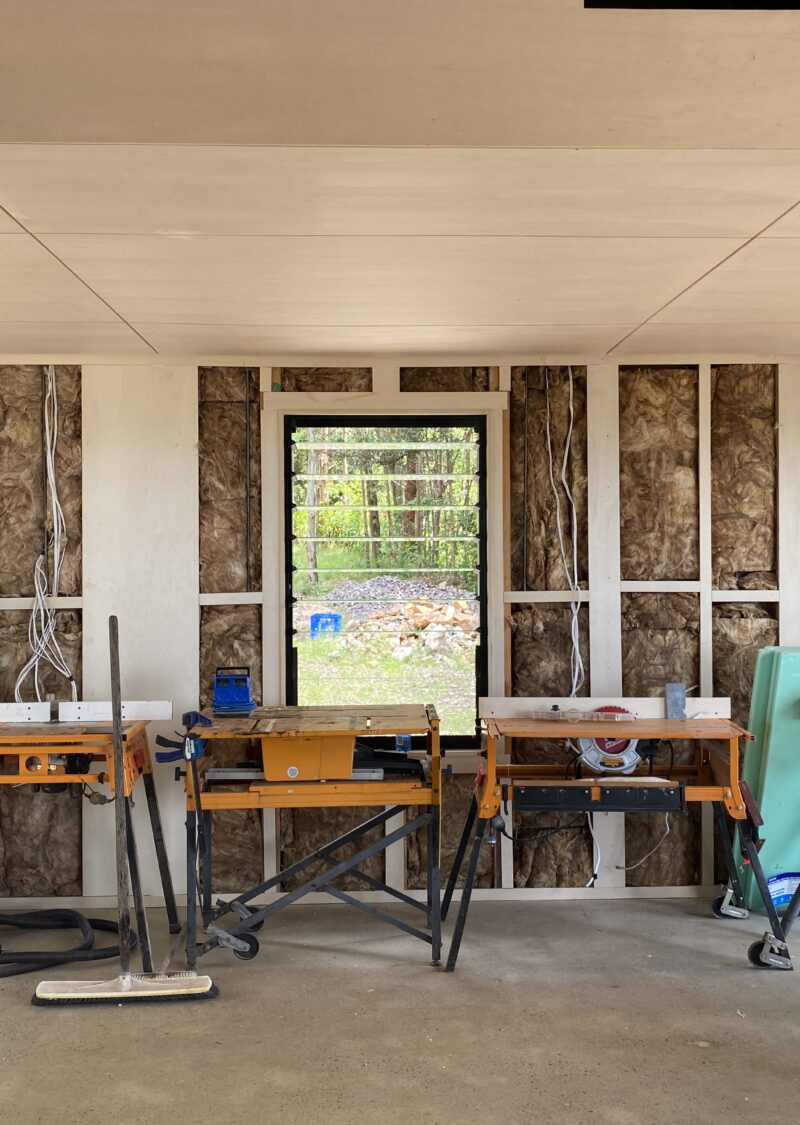
We lined the interior in birch ply. Why? Because there was a heap of it down the road at a really good price.
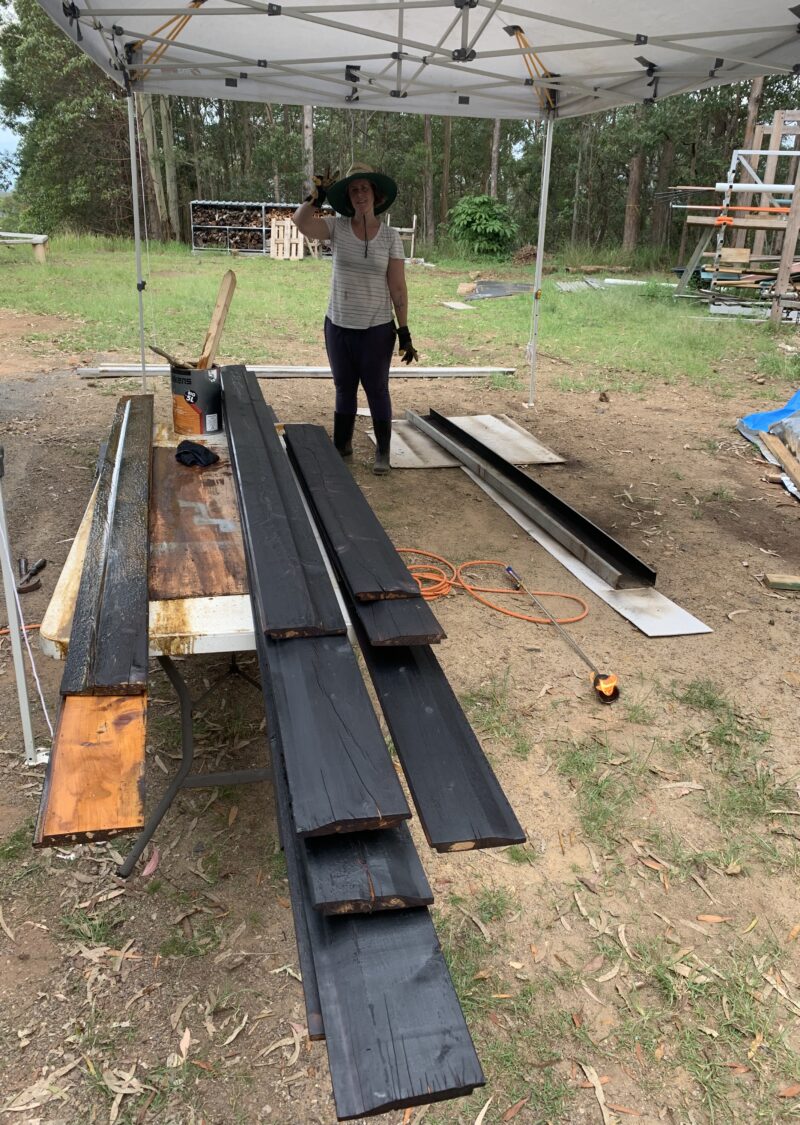
The fireplace was left over from someone’s garage. The external cladding wasn’t exactly what we originally imagined, but it was available at the right price when we needed it. The benchtops are concrete because we could mix and make them ourselves on site.
And somehow those limitations have become part of the character of the place.
This is something we talk about with our clients at Maytree Studios too. At the beginning of a project, the sheer breadth of choices can be overwhelming. Which tap? Which tile? What colour? What cladding? How do you know you’ve made the right decision?
Part of our job is narrowing all that noise down.
But the thing we really love doing is digging until we find the stuff that makes each project unique.
You’ve got a 70s brick house? Great. Let’s work with it rather than fight it. Find what is already good, elevate it and introduce something alongside it that makes it feel intentional.
The goal of a great architectural project isn’t perfection. It’s authenticity.
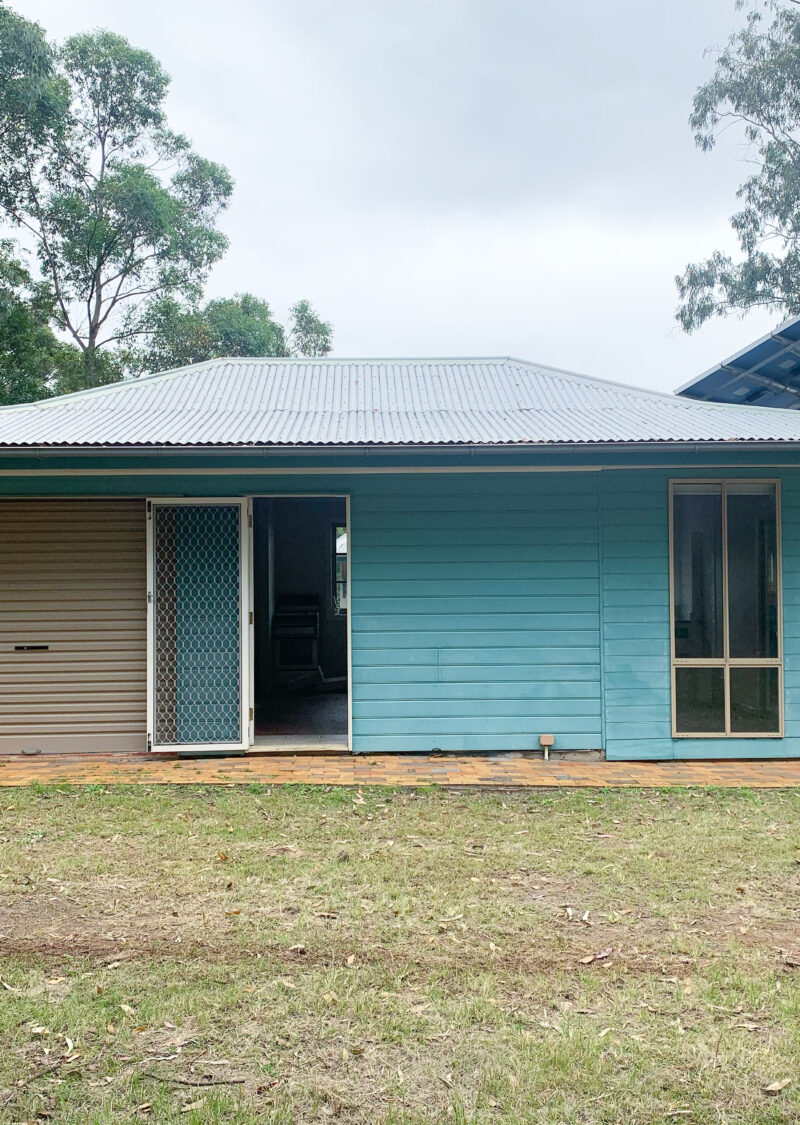

4. Living off-grid changes how you think about resources
I thought I cared about the environment before. And I did. But nothing has made me understand quite how precious water, energy and healthy soil are like living somewhere where those things are genuinely finite.
When you have to think about how much water and power you’re using before doing something completely ordinary, your relationship with resources changes pretty quickly.
That thinking has followed me back to the city, where power and water are quite literally on tap and the consequences of using too much aren’t nearly as obvious.
I notice the light that doesn’t need to be on. Whether I can put another layer on rather than turn the heating up. How much we’re consuming without really thinking about it.
It has also reinforced something in our architectural work: sustainability isn’t simply about bolting some sustainable technology onto a house. Electrification, batteries and efficient systems all matter, but so does designing thoughtfully, consuming less and appreciating that the resources going into our homes are finite and valuable.
5. It’s never as good as Instagram makes it look
We all know this. But I reckon we need reminding every now and then.
The photos show the outdoor bath. Drinks around the firepit. The rolling hills. A glass of wine and a beautiful view.
They don’t show us scrubbing mould off ply because we hadn’t sealed it before an incredibly wet season.
Or endlessly catching mice. We probably should have left the python in the roof.
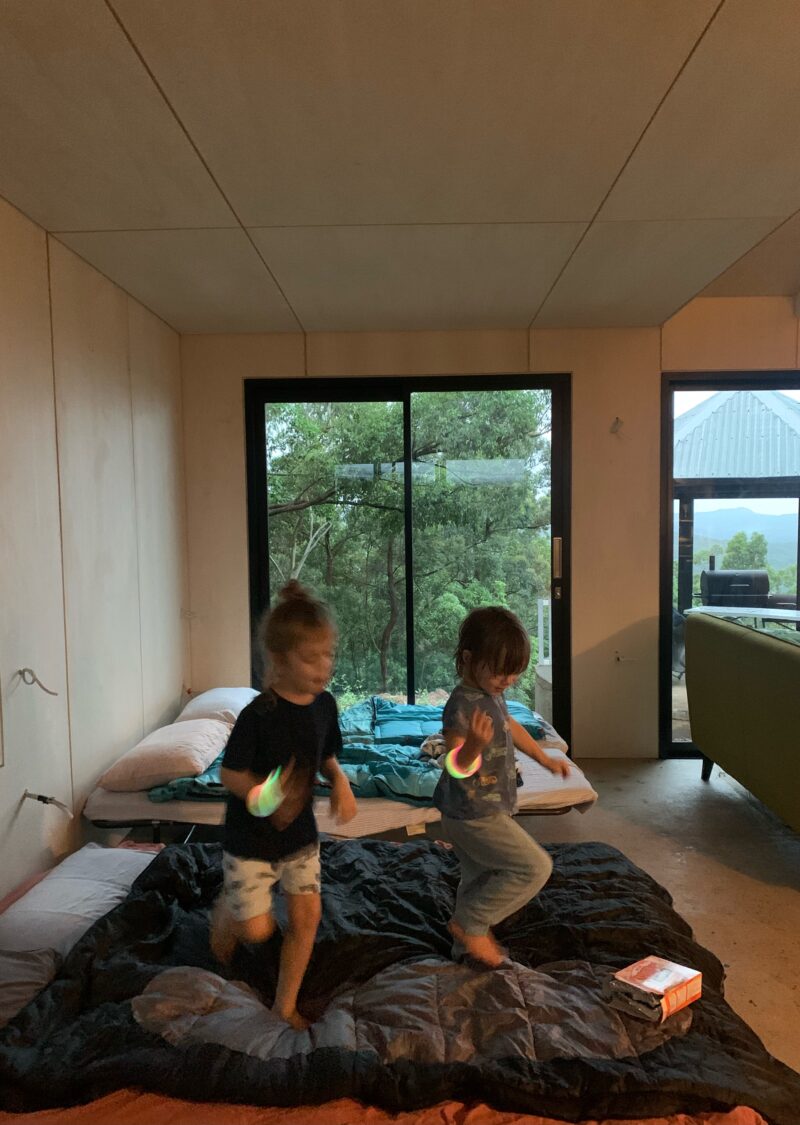
They don’t show bored kids going crazy inside a tiny cabin. The unfinished jobs that remain unfinished because we’ve run out of money, energy or both.
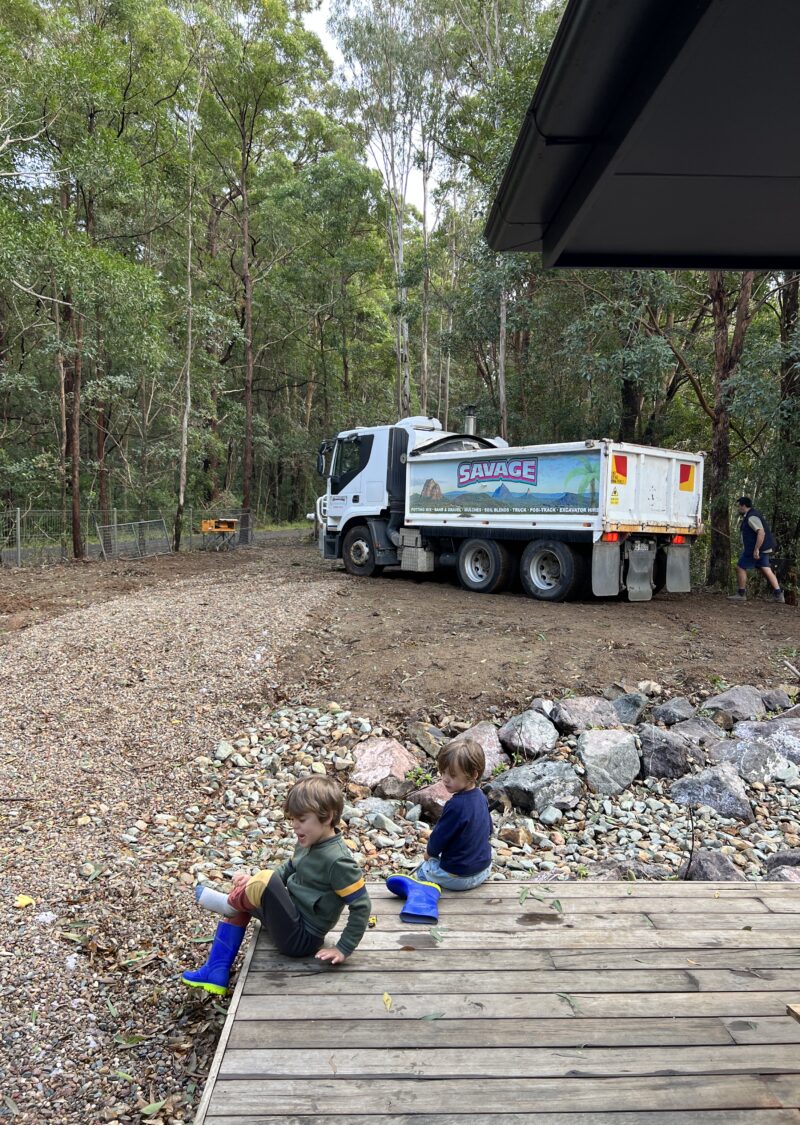
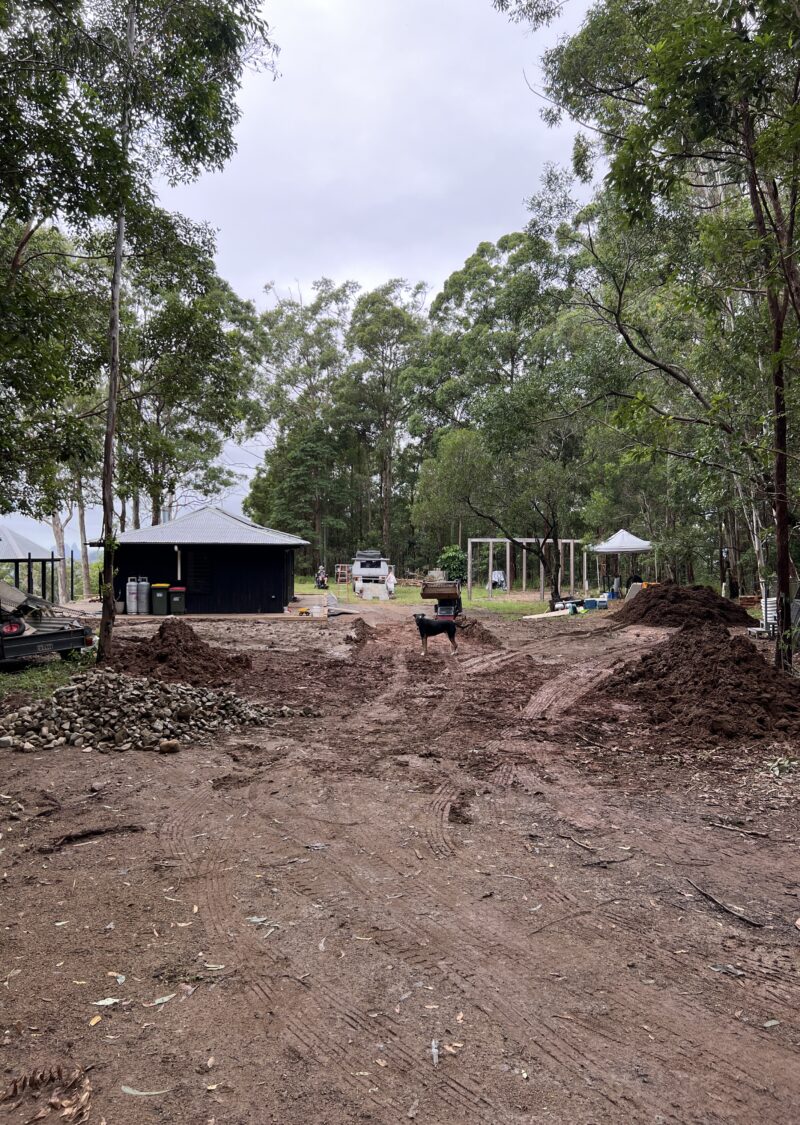
And the mud. So. Much. Mud.
Building is memorable, but it isn’t stress-free.
The funny thing is that a few days, weeks or months later, the frustration starts to disappear. I look back through the photos and instead of remembering whatever disaster felt enormous at the time, I see what we’ve created.
There is something incredibly satisfying about taking an empty piece of land, a run-down building or simply a house ready for its next chapter and slowly turning it into somewhere special.
Maybe that’s why building gets under your skin.
Architecture isn’t about the object on its own. It’s about the relationships and stories it accommodates. The memories formed there. The connection to a place. The strange feeling of responsibility you develop for a piece of dirt and, in return, the way that piece of dirt somehow nurtures you back.
6. Beautiful things are great, but they aren’t the most important thing
This might be the lesson that has stayed with me most.
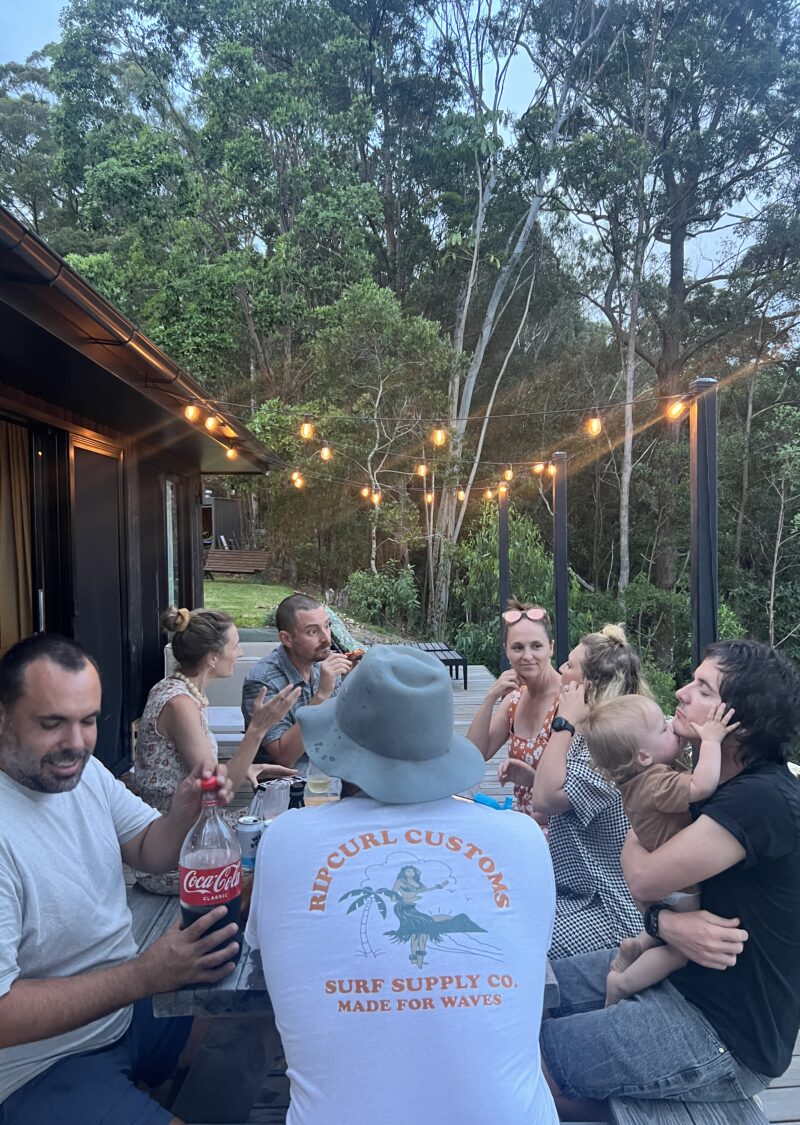
One Easter we had my whole family staying at the property. And there are a lot of us. Tents and caravans everywhere. I snuck off to bed early one night, before the serious drinking really got underway, and lay there listening to my siblings, nieces and nephews laughing and talking outside. It was absolutely pouring. There were about eight of them squeezed around a tiny brazier, trying to stay dry and warm.
And lying there, it suddenly seemed very obvious.
Yes, the charred timber cladding is beautiful. The doors are high-spec. The plywood detailing makes me happy. But none of that is really what makes the place special.
Architecture isn’t about the object on its own. It’s about the relationships and stories it accommodates. The memories formed there. The connection to a place. The strange feeling of responsibility you develop for a piece of dirt and, in return, the way that piece of dirt somehow nurtures you back.
Maybe that’s just another version of keeping the big picture in mind.
My big picture is family, landscape, connection and creating somewhere people want to gather. Someone else’s will be completely different.
The best projects are grounded in something far more meaningful than beauty, status or getting every detail exactly right.
Building Donnington Ridge has reminded me of that. It has also given me a renewed appreciation for what we ask of our clients when they embark on this process with us: the money, uncertainty, compromises, patience and trust involved.
Having now sat a little more firmly on their side of the table, I reckon I understand that better than I did before. And perhaps that’s been the most useful lesson of all.
View Bec’s Donnington Ridge project now, a few years down the track. It’s a lovely sight.
Practical FAQs: Building an off-grid cabin in Queensland.
You’re sold on the idea of an off-grid cabin. What does it mean?
How off grid are you?
At our site we generate our own electricity, collect and filter our own water, harvest our grey water and have an on site septic system. We have a back up generator for heavy use periods when there has been no sun – I think it clicked on automatically a couple of times last winter and just helps keep the batteries charged. Because of the small roof surface, we are not able to generate enough solar for hot water; as a result we use gas for hot water and firewood collected on site for heating.
Is renovating an existing building better than building new?
Not always, but usually. Reusing existing buildings can reduce material waste, construction costs and environmental impact, provided the structure is suitable. At Donnington Ridge, our the slab and wall framing was really solid. We relined the interior walls so that we could add insulation (and get that beautiful ply interior) and relined the exterior with the charred timber – this super thick wall system means the cabin’s internal temperature remains really stable.
It tips into not being worth it when you’re significantly demolishing sections and can’t achieve good waterproofing or termite proofing for the new works. If you’re dealing with poor structure and lots of problems that mean achieving a good outcome aren’t possible, you’re generally better to start again.
As some builders say, “renovating is building with a building in the way”. We always err on the side of reuse, but a good assessment will ensure you don’t spend your money trying to save something that will become a problem in the future.
How do you design a small cabin to feel spacious?
Good planning matters more than floor area. Multipurpose spaces, clever storage, natural light and strong connections to the outdoors can make even a tiny footprint feel generous. Built in furniture rather than loose furniture means things can double up function and they can be sized and fit for purpose.
We adoped a singular material – think about planes of colour or finish in a smaller environment. Avoid expression! This is not a time to inject personality into every corner! In our space we used the single ply material for walls and ceilings. A deep red marmoleum floor ground the space and rich colour can often give a sense of generosity to a room.
A small vaulted ceiling was achieved in our space so if you can achieve a little bit of height somewhere that is great.
What should you consider before building off-grid in Queensland?
Start with the practicalities: planning approvals, access, water supply, solar power and battery storage, wastewater management, bushfire risk and ongoing maintenance. Understanding the site’s opportunities and constraints early can help avoid expensive surprises.
The initial purchase price is often low, but you will likely spend many tens of thousands on a new solar set up and additional rainwater storage so its important you have some cash set aside for these projects after the purchase.
What is the biggest lesson from building your own off grid cabin?
Don’t underspend on your battery and solar equipment and think about where it is all going to go. Your plant room will need room for batteries. You’ll also need room for a water filter and a back up generator – these things make noise – so consider carefully where they’re going.
I also really regret putting a small AC system in. We don’t need it and don’t use it, so I wish I hadn’t prioritised that spend.
It’s hard to get all the decisions right at the outset. Chalk some things up to experience; others are lessons learnt you can pass on to others!
Book your stay at Donnington Ridge (you can pop your feet up and relax!)